
Beyond Broken Promises: What Philanthropy Still Misses About Funding Black Orgs

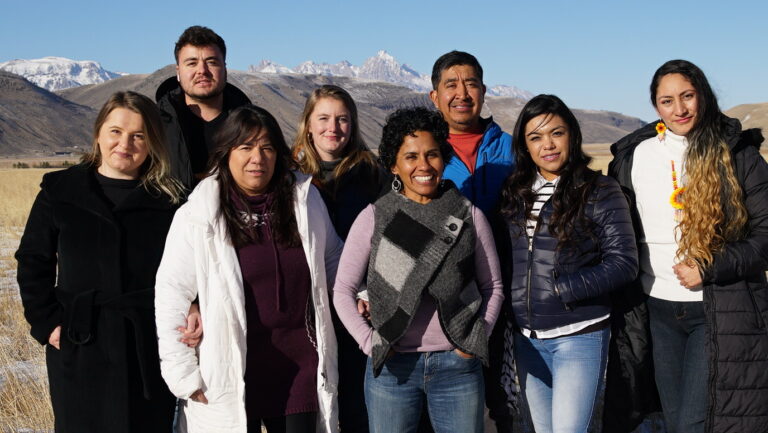
SJF’s 2025 Rise Together series in Seattle (Photo by Sharon Ho Chang)
Earlier this month, the Associated Press reported on a new study showing many funding promises made to Black-led organizations after “2020’s racial reckoning” were never kept. It’s an important story, and we at Social Justice Fund Northwest are glad it’s sparking needed conversations about how BIPOC-led organizations are funded.
But we also feel the story misses something bigger: a long history of broken promises from philanthropy to Black communities, and the work of community-rooted funders that doesn’t always show up in national philanthropy data, but does shape how Black-led organizing is resourced on the ground.
Beyond the AP Story
From funding white supremacists to actively disrupting the civil rights movement, traditional philanthropy is actually well known for working against Black communities. Modern philanthropy has been shaped by power and concentrated white wealth, even as communities of color continue to build their own systems of care, resourcing, and mutual aid.
The Associated Press article echoes what many Black organizations have been saying for decades: traditional philanthropy has consistently failed to invest in—and care for—Black communities. This shows up in lack of intentional relationship-building and in rigid funding practices, like strenuous reporting requirements imposed by many funders.
In SJF’s five-state funder region of Idaho, Montana, Oregon, Washington and Wyoming, many Black-led organizations face additional barriers to funding. These include isolation while working in primarily white communities, rising costs from economic shifts in the Northwest, and backlash from organizing in conservative and rural areas.
A Different Way
Which is why at SJF we have long-practiced a different kind of philanthropy, one that prioritizes Black, Indigenous, and People of Color-led organizations precisely because these communities have historically been underfunded by traditional philanthropy.
SJF’s funding decisions are grounded in community and made by community through a democratic process. We prioritize BIPOC-led, rural, and grassroots organizations with operating budgets of $500k or less, don’t require reporting, and provide mostly general operating support so grantees have the greatest degree of flexibility and self-determination.
We firmly believe that if philanthropy and traditional funders truly want to support systemic change, the sector must move to a trust-based model that prioritizes BIPOC-led organizations and community organizing. And we speak from firsthand experience.
Over our nearly 50-year history, SJF has transformed from a white-led organization—where funding decisions were held by a small group of wealthy folks—into an explicitly cross-class, multiracial organization rooted in trust-based philanthropy and participatory grantmaking.

SJF’s 2018-2020 Black-led Giving Project
Built In Community
Trust-based philanthropy is about reducing longstanding power imbalances between funders and organizations through transparency, collaboration, and mutual accountability. At SJF, we know it works and have practiced it for decades in support of racial justice and equity organizing.
The Giving Project model draws from a tradition of collective giving and community care rooted in Black, Indigenous, and other communities of color. Particularly throughout African and African American history, there are many examples of collective giving, mutual aid, and grassroots philanthropy that SJF is proud to learn from.
In 2015, SJF launched our first-ever Black-led Momentum Giving Project, inspired by the rise of the #BlackLivesMatter movement. Alumni from earlier Giving Projects came together to organize nearly 250 donors and fund eight Black-led organizations across the region.
During the 2020 uprisings, SJF supported another Black-led Giving Project that funded 12 organizations in Washington and Oregon. The project’s cohort of cross-class, multigenerational Black folks built community, learned together, and mobilized resources for Black liberation.
What Comes Next
This approach—trusting Black communities and creating infrastructure for community-led decision-making—is both necessary and replicable across the philanthropic sector. Resourcing Black-led organizations isn’t a trend, it requires long-term commitment, accountability, and a willingness to shift power.
If philanthropy is serious about change, it’s time to scale what community-led funders like SJF have already been doing to support Black-led organizations to a sector-wide level. This means a commitment to building relationships and providing unrestricted, multi-year funding to Black-led organizations.
By investing in trust-based philanthropy models and deepening their investments, large and traditional funders can begin to be accountable and help repair the harm caused by their lack of follow-through from 2020 and beyond.
Anything less risks repeating a long history of empty funder promises to Black communities. But it doesn’t have to. The path forward already exists, and communities have been building it for generations.
The question is whether philanthropy is ready to follow their lead.
Written by Aisha Al-Amin, Director of Development, and Sharon Ho Chang, Strategic Communications Manager
Subscribe to SJF’s eNews for updates and funding opportunities.
Follow SJF on Instagram and LinkedIn for photos, videos, grantee stories, and more.