
How Voices Jackson Hole Is Building a Multicultural Talent Pipeline in the Tetons

Voices Jackson Hole Co-Founders (2020): Tina Babis, Nicolae Botan, Blanca Moye, Jordan Rich, Miriam Morillon, Roney de la Cruz, Elizabeth Perez, Marcela Badillo Carrillo, who believed belonging was possible. (Photo courtesy of Voices Jackson Hole)
By Alin Badillo Carrillo
Behind Teton County’s postcard beauty lies a hidden divide.
Our multicultural neighbors—immigrants who arrived with little more than hope, their children who grow up translating for their parents, and the 1.5 generation who carry one country in their heart and another in their daily life—make up 40% of the local workforce. They drive our economy, staff our hotels, care for our children, and enrich our lives.
Yet many still face barriers to housing, healthcare, and community participation. Language gaps and lack of trusted connections continue to leave our community’s backbone isolated.
At Voices Jackson Hole (VJH), we believe the solution is belonging. When people connect and grow together, doors open. Those relationships turn isolation into opportunity. When multicultural neighbors thrive, our whole community grows stronger.
So how do you build trust between a town and its diverse residents — people who speak more than 20 different languages, represent many cultures, and make up nearly half the workforce?
Starting Small, Thinking Systemically
VJH began in March 2020 during the pandemic. Resources for immigrants were limited, so we shared critical information in people’s first languages about housing, health, food, and safety through our Outreach program. Families asked for more: after‑school programs, events, and opportunities to connect.
In 2021, the Community Foundation of Jackson Hole asked us to help immigrants shape a behavioral health survey. By 2022, we formalized that work as Involvement, ensuring immigrants’ voices shape this community. That same year, we launched the Latine Professional Network (LPN), creating space for Latine neighbors to grow careers and connections.
In 2023, we became our own 501(c)(3). That year, families wanted to serve the community but lacked confidence.
In 2024, we launched Development services, helping immigrants fulfill personal and professional goals.
In 2025, we welcomed the Eastern European Community of Jackson Hole (EECJH) as an affinity group, extending our pipeline to neighbors from a region often overlooked.
We learned that shifting power requires learning and practice. Our pipeline has been in place since day one. Today, it turns service into leadership.
In 2026, we asked families: What word best describes us? They helped us find multicultural — immigrants, children of immigrants, and the 1.5 generation.

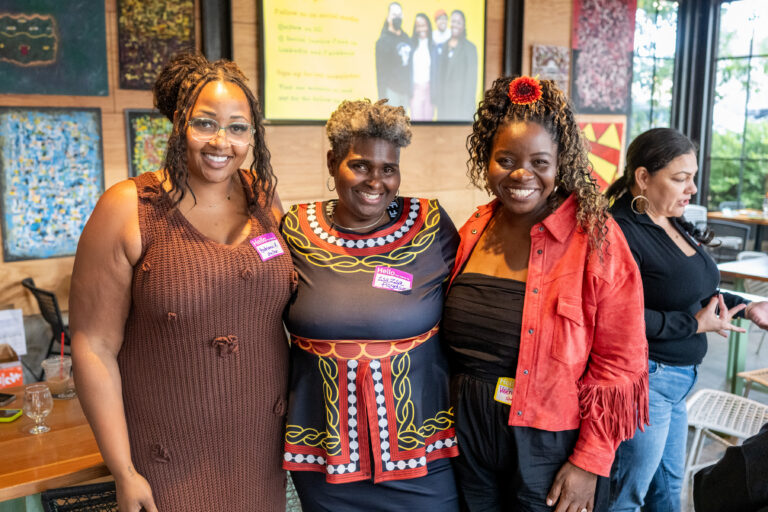
Community members share their voices in a VJH focus group—helping co-design the programs and services that shape our multicultural pipeline. (Photo courtesy of Voices Jackson Hole)
Our Pipeline Model: From Client to Leader
Today, we serve over 750 households from 24 countries speaking 20 languages. We connect with over 2,000 individuals three times a week. We have supported over 100 leaders, and over 1,000 people have shared their voices in community design
Our model is rooted in growth and shared leadership. A family gets help. Someone becomes a mobilizer or organizer. They enter leadership programs. Then they move into any of these roles:
- Business owner
- Higher employment
- Manager or supervisor
- Executive role
- Board member
- Member of an alliance or collective
- Program founder
This pipeline delivers jobs, stable homes, mental health care, and safety. A trusted network helps you find a therapist, housing, or a safe place. Trust turns unsafe into safety, a worker into a manager, a client into a board member.
That’s workforce development, community power, and belonging in action.
Real examples:
- Toma Klus received information, became a mobilizer and organizer, and is opening a nonprofit for Eastern European community members.
- Antuanett Lopez co-created the Latina Empowerment Circle, joined the Latine Professional Network, runs her own Reconciliation Health Therapy, hosts Cultivos de Sabiduria, and serves on St. John’s Health advisory board.
- Miriam Morillon, a VJH co-founder, started as a mobilizer, opened Camina Con Migo, and is joining a new board to share her finance expertise.
- Jessyca Valdez received crisis information, joined as a mobilizer, completed Invisible in Plain Sight, and now has stable housing and multiple businesses while leading workshops.

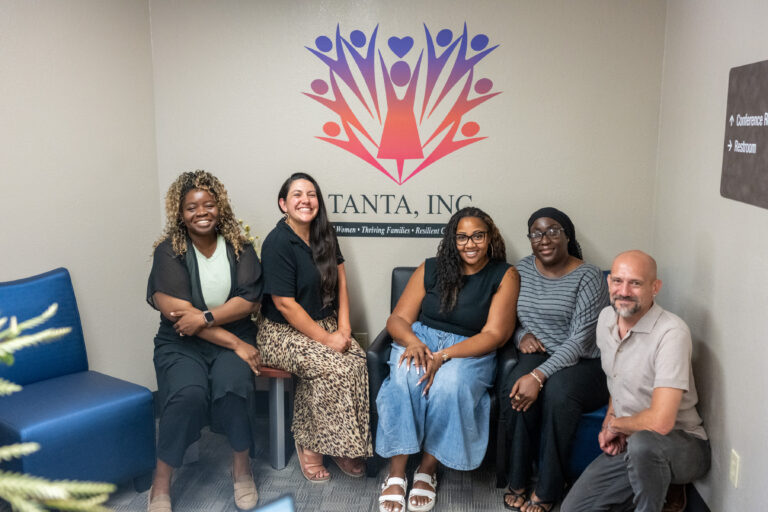
Eastern European Community of Jackson Hole (EECJH) — one of VJH’s affinity groups where belonging begins. (Photo courtesy of Voices Jackson Hole)
VJH staff grew from this community, not outside of it.
Our Vision for the Future
We want to scale this pipeline across the Teton region. Imagine every multicultural family seeing a path to stability, leadership, homeownership, and entrepreneurship. That’s economic and social justice.
We’re documenting this model so other rural communities can replicate it. What works in Jackson Hole can work in dozens of small towns.
Belonging Is a Verb
Housing is still too expensive. Healthcare remains out of reach. But when Toma builds a nonprofit, Antuanett runs her business and serves on a hospital board, Miriam shares her finance expertise on a new board, Jessyca owns businesses and gives back, belonging becomes real.
That’s the community we are co-designing together — not a paradise only for the privileged, but a Teton region that reflects all of us.
Alin Badillo Carrillo (she/her/ella) is the Executive Director of Voices Jackson Hole. A graduate of Jackson Hole High School, the University of Wyoming, and the University of New Mexico, she holds dual master’s degrees in Public Health and Latin American Studies and has been a member of the Teton community for over 22 years.
Subscribe to SJF’s eNews for updates and funding opportunities.
Follow SJF on Instagram and LinkedIn for photos, videos, grantee stories, and more.